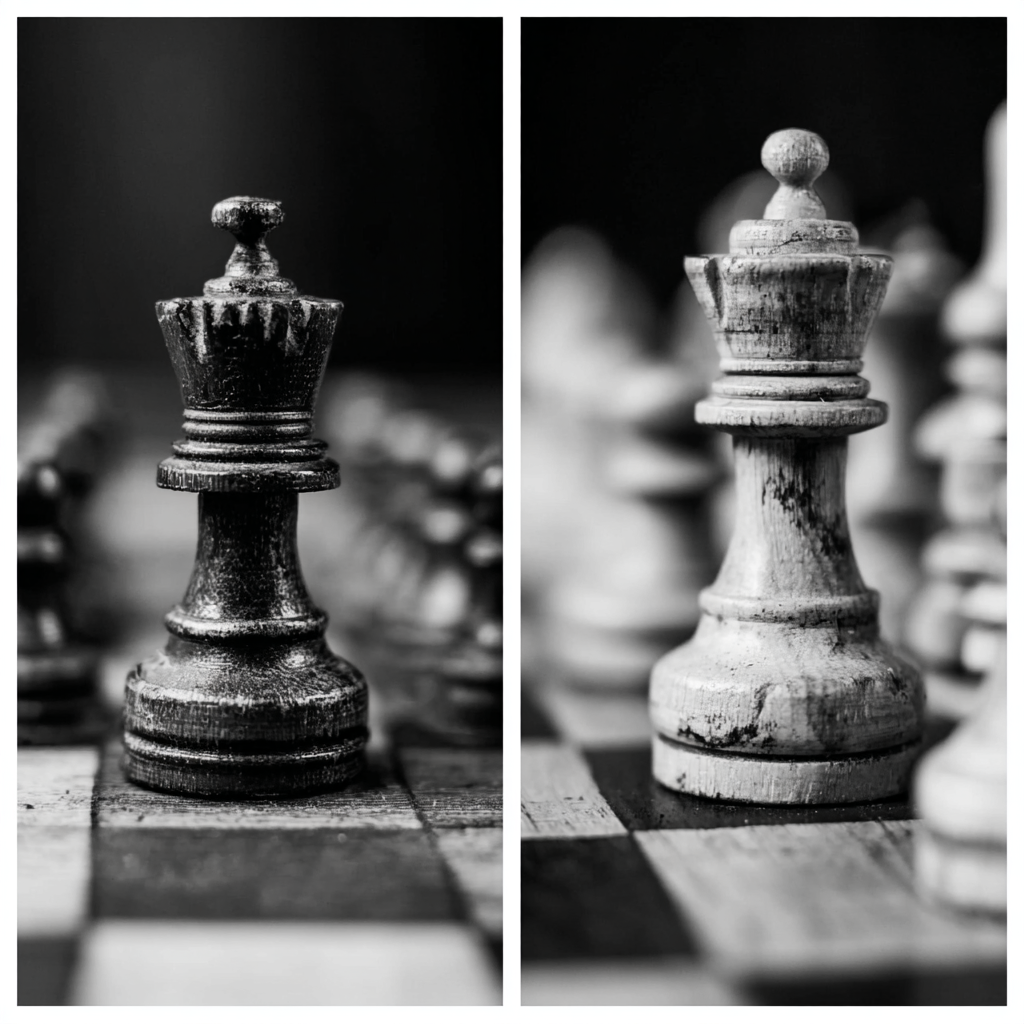
In the quest to improve at chess, players often seek the magic formula that will rapidly elevate their game. While there’s no single secret to chess mastery, one truth stands undisputed among coaches, grandmasters, and chess educators worldwide: chess drills are absolutely essential for systematic improvement. Far from being mundane exercises, these structured training sessions form the bedrock upon which all chess excellence is built.
Understanding why chess drills are so important requires examining how the human brain learns complex skills, how chess expertise develops, and what separates strong players from beginners. The answer lies not just in memorizing moves or calculating variations, but in developing the fundamental cognitive patterns that allow chess masters to navigate the infinite complexity of the royal game.
The Science Behind Chess Skill Development
Chess improvement follows the same principles as any complex skill acquisition. Research in cognitive psychology shows that expertise develops through deliberate practice—focused, goal-oriented exercises that gradually build the mental architecture necessary for high performance. Chess training drills are structured exercises designed to hone specific aspects of your game. Incorporating a variety of drills into your training routine can help you develop a well-rounded skill set.
The human brain learns chess through pattern recognition, a process that requires extensive exposure to specific types of positions and motifs. Pattern recognition in chess involves identifying and recalling familiar positions, tactical motifs, or structures that appear repeatedly during games. These patterns allow players to quickly assess situations, select moves, and execute strategies without the need for exhaustive calculation.
Expert chess players have built vast libraries of these patterns through years of study and practice. Grandmasters excel in this skill, often recognizing complex patterns at a glance due to their extensive experience. But this expertise doesn’t develop through casual play alone—it requires systematic exposure to the building blocks of chess knowledge, which is exactly what drills provide.
Table 1: Cognitive Benefits of Chess Drills by Skill Area
| Skill Area | Cognitive Benefit | Training Method | Expected Timeline | Impact on Play |
|---|---|---|---|---|
| Pattern Recognition | Faster threat identification | Tactical puzzles | 2-6 months | Immediate tactical awareness |
| Calculation | Deeper variation analysis | Complex combinations | 6-12 months | Better position evaluation |
| Visualization | Mental board representation | Blindfold exercises | 3-9 months | Improved planning accuracy |
| Endgame Technique | Precise winning methods | Basic endings repetition | 1-3 months | Converting advantages |
| Opening Understanding | Structural knowledge | Thematic position study | 4-8 months | Better middlegame transitions |
Pattern Recognition: The Master’s Secret Weapon
One of the most crucial reasons chess drills are essential lies in their ability to develop pattern recognition. According to research by chess psychologists, master-strength players use 40% calculation and 60% pattern recognition. This means that the majority of a strong player’s decision-making process relies on instantly recognizing familiar patterns rather than calculating every possibility from scratch.
Consider this profound insight: when a grandmaster glances at a position, they don’t see 32 individual pieces on 64 squares. Instead, they see clusters of meaningful patterns—a weakened kingside, a backward pawn, a tactical motif ready to be exploited. This chunking ability allows them to process information exponentially faster than beginners who must analyze each element separately.
Chess drills systematically expose players to the fundamental patterns that appear repeatedly in games. Tactical drills teach you to recognize pins, forks, skewers, and discovered attacks. Endgame drills ingrain the basic techniques for converting material advantages. Opening drills help you understand the typical pawn structures and piece configurations that arise from different openings.
Without this pattern-based foundation, players remain trapped in slow, laborious calculation for every decision. With it, they develop chess intuition—the ability to sense what moves are worth calculating and which plans are most promising.
Table 2: Essential Chess Patterns Developed Through Drills
| Pattern Category | Key Motifs | Frequency in Games | Drill Types | Beginner Priority |
|---|---|---|---|---|
| Basic Tactics | Pin, Fork, Skewer | 80-90% | Simple puzzles | Very High |
| Back Rank | Mate threats, escapes | 60-70% | Specific positions | High |
| Piece Coordination | Double attack, battery | 70-80% | Complex puzzles | High |
| Pawn Structures | Passed pawns, weaknesses | 90-95% | Endgame studies | Medium |
| King Safety | Mating attacks, defenses | 85-95% | Checkmate patterns | Very High |
| Endgame Technique | Opposition, triangulation | 40-50% | Basic endings | Medium |
Building Tactical Awareness: The 99% Truth
The famous quote “Chess is 99% tactics” by German master Richard Teichmann might be an exaggeration, but it highlights a crucial truth: tactical awareness is fundamental to chess success. No matter how sophisticated your positional understanding or how deep your opening knowledge, a single overlooked tactic can end the game instantly.
Tactical drills serve multiple essential functions. First, they build your library of tactical patterns. The more pins, forks, and combinations you’ve seen, the faster you’ll recognize them in your own games. Second, they improve your calculation skills by forcing you to visualize sequences of moves mentally. Third, they develop what chess coaches call “tactical radar”—the instinctive sense that tactics lurk beneath the surface of a position.
Perhaps most importantly, tactical drills teach you both sides of the tactical equation: how to create threats and how to defend against them. Knowing when to look for tactical combinations is a skill which is just as important as the skill of finding tactical combinations. This defensive awareness prevents you from falling victim to your opponent’s tactics while positioning you to exploit their oversights.
The exercises expose you to hundreds of different tactical and positional motifs in a short time. This concentrated exposure is impossible to achieve through game play alone, where tactical opportunities might arise only occasionally and in unpredictable contexts.
Endgame Mastery: The Foundation of Chess Understanding
While tactics often decide games in the short term, endgame knowledge provides the foundation for all chess understanding. World champion Jose Raul Capablanca said, “To succeed, study the endgame before everything else.” This advice reflects a profound truth: knowing how games should end influences every decision you make throughout the game.
Endgame drills are particularly important because they teach precise technique. In the endgame, you have to play extremely precisely. In a technical endgame, one king move might be a draw, another a loss, and another the win. You have to play them exactly, no margin for error, unlike the opening where you can play e4 or d4 or even na3 and it doesn’t really matter much.
The endgame teaches you how to maximize the potential of each piece. When material is limited, every piece must work optimally. This efficiency carries over into all phases of the game, making you a more economical and effective player overall.
Knowledge of the endgame improves your decision making in all other facets of chess! Knowing what’s around the corner better than your opponent is something that separates the “Pros” from the “Average Joes”; it’s more important than amateurs realize. When you understand which endgames are winning and which are drawn, you can steer the game toward favorable conclusions from the very beginning.
Table 3: Priority Endgame Drills by Player Level
| Player Level | Essential Endgames | Study Hours Needed | Key Concepts | Practical Impact |
|---|---|---|---|---|
| Beginner (Under 1200) | K+Q vs K, K+R vs K | 5-10 hours | Basic checkmates | Converting material advantages |
| Intermediate (1200-1800) | K+P vs K, R+P vs R | 15-25 hours | Opposition, activity | Understanding pawn endings |
| Advanced (1800-2200) | Minor piece endings | 30-50 hours | Technique refinement | Precise endgame play |
| Expert (2200+) | Complex theoretical positions | 50+ hours | Deep preparation | Professional-level accuracy |
Opening Preparation: Beyond Memorization
While opening knowledge is often criticized as mere memorization, proper opening drills develop something far more valuable: structural understanding. Instead of memorizing move sequences, effective opening drills teach you to recognize the typical plans, pawn structures, and piece deployments that arise from different openings.
Opening drills help you understand why certain moves are played, not just what moves to play. They expose you to the common tactical motifs and strategic themes associated with your chosen openings. Most importantly, they prepare you for the middlegame positions that will arise, giving you a roadmap for how to proceed once the theoretical phase ends.
The importance of opening preparation varies by level. Opening knowledge can help you find the right ideas earlier in the game, but you also don’t want to turn it into a memorizing session where you just know moves for lines your opponents are unlikely to play at that level. For most amateur players, understanding basic opening principles and knowing a few reliable systems is more valuable than memorizing extensive theory.
However, some opening knowledge remains crucial. You need to be aware of where the cracks can start to occur. And you can’t just play anything; there are specific opening lines to adhere to or the opening gets refuted in <15 moves and you are crushed.
Calculation Training: The Engine of Chess Thought
Chess drills are essential for developing calculation skills—the ability to mentally visualize and evaluate future positions. Unlike pattern recognition, which happens almost instantaneously, calculation is a deliberate process that improves with systematic practice.
Calculation drills teach you to think systematically about chess positions. They develop your ability to identify candidate moves, visualize the resulting positions, and evaluate the consequences of different choices. This skill is transferable to all aspects of chess, from tactical combinations to strategic planning.
Endgames are particularly valuable for calculation training because they typically involve fewer pieces, making it easier to calculate accurately. Endgames are the most powerful way to learn tactics, properties of the pieces, visualization, and calculation. The precision required in endgames forces you to calculate with extreme accuracy, developing skills that serve you well in more complex positions.
Table 4: Calculation Development Through Different Drill Types
| Drill Type | Calculation Depth | Difficulty Level | Skills Developed | Time Investment |
|---|---|---|---|---|
| Simple Tactics | 1-3 moves | Beginner | Basic visualization | 15-30 min daily |
| Complex Combinations | 4-6 moves | Intermediate | Deep calculation | 30-45 min daily |
| Endgame Studies | Variable | Advanced | Precise technique | 20-30 min daily |
| Blindfold Exercises | 3-5 moves | Advanced | Mental visualization | 15-20 min daily |
| Composition Studies | 5+ moves | Expert | Creative calculation | 30-60 min weekly |
Time Management and Chess Intuition
Regular drill practice develops chess intuition—the ability to quickly identify the most promising moves and plans without extensive calculation. This intuition is crucial for practical play, especially in time-limited formats.
When you’ve solved thousands of tactical puzzles, you develop an instinctive feel for when tactics are available. When you’ve practiced hundreds of endgames, you instinctively know which piece placements are optimal. This intuitive knowledge allows you to make good decisions quickly, reserving your calculation time for the most critical moments.
Chess drills also teach you to recognize your limitations. As you practice different types of positions, you learn which areas need more work and which patterns you haven’t yet mastered. This self-awareness is essential for continued improvement and effective study planning.
The Structured Approach to Improvement
Perhaps the most important reason chess drills are essential is that they provide a structured approach to improvement. Random game play, while enjoyable and necessary, doesn’t guarantee that you’ll encounter the specific patterns and techniques you need to learn. Drills ensure systematic exposure to the fundamental building blocks of chess knowledge.
Consistent practice is vital for improvement. Dedicate a specific amount of time each day or week to training drills. Regularity enhances retention and helps build a strong foundation. The repetitive nature of drills might seem tedious, but this repetition is precisely what allows patterns to become automatic and techniques to become second nature.
Set clear goals for your training sessions. Whether it’s solving a certain number of tactical puzzles or practicing a particular opening, having goals provides direction and motivation. Include a variety of drills in your training routine. Balancing tactical exercises, endgame studies, opening practice, and strategic analysis ensures comprehensive improvement.
Table 5: Weekly Training Schedule by Player Level
| Player Level | Tactical Drills | Endgame Study | Opening Review | Game Analysis | Total Hours/Week |
|---|---|---|---|---|---|
| Beginner | 3 hours | 2 hours | 1 hour | 1 hour | 7 hours |
| Intermediate | 4 hours | 2.5 hours | 1.5 hours | 2 hours | 10 hours |
| Advanced | 5 hours | 3 hours | 2 hours | 3 hours | 13 hours |
| Expert | 6 hours | 4 hours | 3 hours | 4 hours | 17 hours |
Common Misconceptions About Chess Drills
Many players resist drill practice due to misconceptions about its value. Some believe that solving puzzles won’t help their game because “puzzle positions never occur in real games.” This misses the point entirely. Puzzles develop pattern recognition and calculation skills that apply to countless similar situations, even if the exact positions don’t repeat.
Others argue that drills are boring compared to playing games. While personal preferences vary, the most efficient path to improvement combines both drilling and game play. Games provide practical experience and motivation, while drills develop the specific skills needed to excel in those games.
Some players worry that drilling will make them “mechanical” or destroy their creativity. In reality, the opposite is true. Strong technique and pattern recognition provide the foundation for creative play. You can’t be truly creative without first mastering the fundamentals.
The Long-Term Perspective
Chess improvement through drills is a long-term process that requires patience and persistence. The benefits accumulate gradually, and progress might not be immediately apparent. However, players who commit to regular drill practice invariably see significant improvement over time.
The goal isn’t to reach a specific rating or achieve a particular title, but to develop a deep understanding and appreciation of chess. Drills are the vehicle for this development, providing the systematic exposure to chess patterns and techniques that allows true expertise to flourish.
As you embark on this journey of growth, remember that each drill you undertake is a step closer to becoming a more confident, skilled, and strategic chess player. The process may be challenging, but the rewards—improved tactical vision, better endgame technique, sharper calculation, and deeper chess understanding—make the effort worthwhile.
Conclusion: The Irreplaceable Foundation
Chess drills are not just helpful for improvement—they are absolutely essential. They provide the systematic pattern exposure, skill development, and knowledge building that forms the foundation of all chess expertise. While games provide practical experience and motivation, drills supply the technical skills and pattern recognition that make strong play possible.
Whether you’re a beginner learning basic checkmates or an advanced player refining complex endgame technique, drills offer the most efficient path to improvement. They transform the seemingly infinite complexity of chess into manageable, learnable patterns and techniques.
The question isn’t whether chess drills are important—it’s how to incorporate them most effectively into your training routine. By understanding the specific benefits of different types of drills and committing to regular practice, you can accelerate your chess development and achieve levels of play that might otherwise take years to reach.
Every chess master was once a beginner who committed to the disciplined practice that drills provide. By embracing this essential aspect of chess training, you join a tradition of improvement that has produced generations of strong players and will continue to do so for generations to come. The path to chess mastery runs directly through the systematic study that only drills can provide.