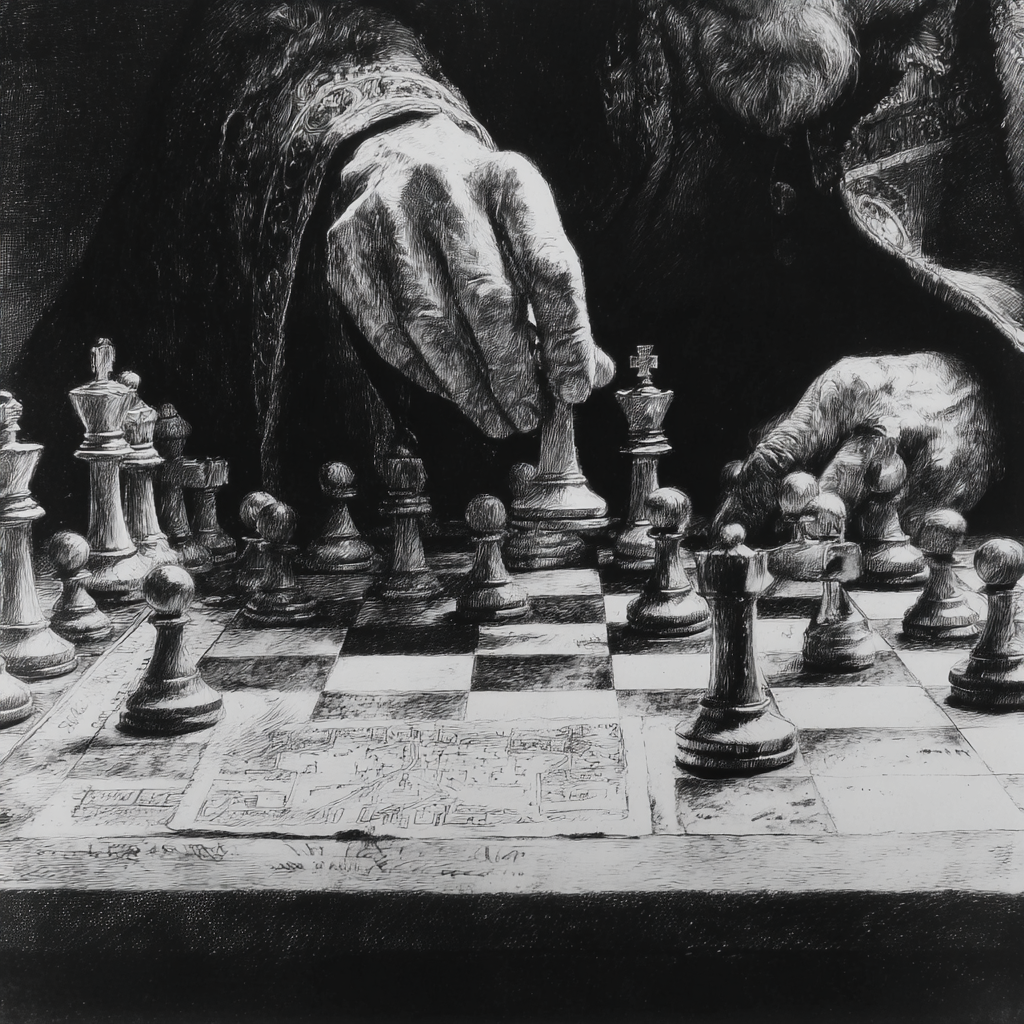
Board vision in chess is the ability to perceive and understand the entire chessboard as a unified battlefield, rather than focusing on isolated pieces or narrow tactical sequences. It’s the difference between a beginner who sees only individual moves and a master who understands the complex web of relationships between all 32 pieces. Developing superior board vision is perhaps the most crucial skill separating intermediate players from advanced ones.
Understanding Board Vision: More Than Just Seeing Pieces
Board vision encompasses several interconnected abilities. First, there’s spatial awareness – the capacity to quickly identify piece relationships, control of squares, and potential piece coordination across the entire board. Second is pattern recognition – instantly recognizing common tactical motifs, positional themes, and strategic structures. Third is dynamic vision – the ability to visualize how the position might evolve over several moves, considering multiple candidate moves simultaneously.
Many players suffer from what chess coaches call “tunnel vision” – becoming so fixated on one area of the board or one particular plan that they miss critical developments elsewhere. This selective blindness leads to overlooking opponent threats, missing tactical opportunities, and failing to coordinate pieces effectively.
The Foundation: Systematic Board Scanning Techniques
Developing systematic scanning habits forms the bedrock of improved board vision. Instead of randomly jumping from piece to piece, masters employ structured approaches to board evaluation. The most effective method involves a three-phase scanning process.
Phase One: Threat Assessment Begin every turn by identifying immediate tactical threats – both yours and your opponent’s. This includes checks, captures, and attacks on undefended pieces. Look for pins, forks, skewers, and discovered attacks that might be lurking just beneath the surface.
Phase Two: Piece Activity Evaluation Assess the activity level of all pieces on both sides. Identify which pieces are well-placed, which are passive or poorly coordinated, and which pieces have potential for improvement. Pay special attention to pieces that could become more active with simple repositioning.
Phase Three: Strategic Feature Recognition Examine pawn structures, king safety, control of key squares and files, and long-term strategic imbalances. This phase connects immediate tactical considerations with broader positional understanding.
Essential Training Exercises for Board Vision Development
Specific exercises can dramatically accelerate board vision improvement. The most effective training methods target different aspects of visual processing and pattern recognition.
Blindfold Visualization Exercises Start with simple positions and practice visualizing the entire board without looking. Begin with endgame positions containing fewer pieces, then gradually progress to complex middlegame positions. Spend 5-10 minutes daily visualizing positions from your recent games, trying to recall the exact placement of every piece.
Pattern Recognition Drills Study tactical puzzles not just to find the solution, but to recognize the underlying patterns quickly. Focus on common tactical motifs: pins, forks, skewers, discovered attacks, deflection, and decoy patterns. Create mental categories for different tactical themes and practice identifying them rapidly.
Piece Relationship Mapping In any position, practice identifying which pieces support each other, which pieces attack enemy pieces, and which pieces control important squares. Draw imaginary lines connecting related pieces to visualize the invisible threads that bind the position together.
| Training Exercise | Time Investment | Skill Level | Primary Benefit | Frequency |
|---|---|---|---|---|
| Blindfold Visualization | 10-15 minutes | Beginner-Advanced | Spatial Memory | Daily |
| Tactical Pattern Recognition | 15-20 minutes | Intermediate+ | Pattern Speed | Daily |
| Piece Relationship Mapping | 5-10 minutes | All Levels | Coordination Understanding | 3x weekly |
| Multi-Move Calculation | 20-30 minutes | Advanced | Dynamic Vision | 4x weekly |
| Board Scanning Drills | 10 minutes | All Levels | Systematic Evaluation | Daily |
| Complex Position Analysis | 30-45 minutes | Intermediate+ | Deep Understanding | 2x weekly |
Advanced Techniques: Chunk Recognition and Pattern Grouping
As board vision develops, players begin to see the board not as 64 individual squares, but as meaningful chunks of related information. This chunking ability allows masters to process complex positions rapidly by recognizing familiar patterns and structures.
Developing Chunk Recognition Study master games and identify recurring patterns: common pawn chains, typical piece configurations, standard attacking formations, and defensive setups. The key is to see these patterns as single units rather than collections of individual pieces.
Strategic Pattern Libraries Build a mental library of strategic patterns: weak squares, pawn weaknesses, piece coordination themes, and typical plans for different pawn structures. When you encounter a new position, your brain should automatically search this library for relevant patterns.
Dynamic Pattern Recognition Advanced players don’t just recognize static patterns – they see dynamic patterns, understanding how current piece arrangements might evolve into familiar tactical or strategic motifs over the next few moves.
The Role of Calculation in Board Vision
While board vision involves seeing the current position clearly, it’s intimately connected with calculation – the ability to visualize future positions accurately. Improving calculation skills directly enhances board vision by expanding your capacity to see potential piece relationships and tactical possibilities.
Structured Calculation Methods Develop systematic approaches to calculation. When analyzing candidate moves, visualize the resulting position completely before moving to the next variation. Practice the “candidate move” method: identify 3-4 reasonable moves, then calculate each one thoroughly rather than jumping randomly between possibilities.
Visualization Accuracy Work on maintaining accurate mental images of the board during calculation. A common error is losing track of piece positions during complex variations, leading to miscalculation and blunders. Regular blindfold practice significantly improves visualization accuracy.
Common Board Vision Errors and How to Avoid Them
Understanding typical board vision failures helps players identify and correct their own blind spots. The most common errors stem from cognitive biases and processing limitations that affect all chess players.
Confirmation Bias in Position Evaluation Players often see what they want to see, focusing on moves that support their preferred plan while ignoring contrary evidence. Combat this by deliberately looking for reasons why your intended move might be wrong before committing to it.
Attention Tunneling Becoming fixated on one area of the board while ignoring developments elsewhere is perhaps the most common board vision error. Force yourself to scan the entire board regularly, especially when you feel certain about your plan.
Piece Bias Many players unconsciously favor certain pieces, paying more attention to queens and rooks while neglecting bishops, knights, and pawns. Practice giving equal attention to all pieces during position evaluation.
| Common Error | Symptom | Underlying Cause | Correction Method | Practice Focus |
|---|---|---|---|---|
| Tunnel Vision | Missing threats on opposite side | Attention fixation | Systematic scanning routine | Full-board awareness drills |
| Piece Blindness | Ignoring minor pieces | Hierarchical thinking | Equal piece attention training | Minor piece tactical puzzles |
| Pattern Rigidity | Forcing familiar patterns | Limited pattern library | Diverse position study | Unusual position analysis |
| Calculation Errors | Losing track during variations | Visualization weakness | Blindfold practice | Structured calculation methods |
| Tempo Blindness | Missing move order nuances | Linear thinking | Dynamic evaluation training | Tempo-focused exercises |
| Coordination Neglect | Uncoordinated piece play | Isolated piece thinking | Relationship mapping | Team coordination drills |
Technology and Tools for Board Vision Training
Modern technology offers unprecedented opportunities for board vision development. Chess software and online platforms provide specialized training tools that weren’t available to previous generations of players.
Chess Training Software Programs like ChessBase, Chess.com, and Lichess offer specific board vision training modules. These tools can present positions with certain pieces highlighted or hidden, forcing you to rely on memory and visualization. Many platforms offer “vision trainer” features that test your ability to identify piece positions and relationships.
Mobile Applications Smartphone apps allow for convenient board vision training during commutes or breaks. Apps focusing on pattern recognition, tactical puzzles, and position memory can supplement formal training sessions.
Analysis Engines as Training Partners Use chess engines not just to check your analysis, but to discover board vision blind spots. When your evaluation differs significantly from the engine’s assessment, examine what you missed – often it’s a case of inadequate board vision rather than pure calculation error.
Integrating Board Vision Training into Your Study Routine
Effective board vision improvement requires consistent, structured practice integrated into your overall chess development program. The key is balancing specific board vision exercises with general chess study.
Daily Practice Schedule Dedicate 15-20 minutes daily specifically to board vision training. This might include blindfold visualization, pattern recognition exercises, or systematic position analysis. Consistency matters more than duration – regular short sessions produce better results than occasional long sessions.
Game Analysis Integration When analyzing your games, pay special attention to moments where you missed important features of the position. Create a “board vision error” category in your game analysis, noting positions where better board vision would have changed your decisions.
Progressive Difficulty Start with simple positions and gradually increase complexity. Begin with endgame positions containing 6-8 pieces, then progress to middlegame positions with full armies. As your skills develop, work with positions containing unusual piece configurations that challenge your pattern recognition abilities.
The Psychological Aspects of Board Vision
Board vision isn’t purely a technical skill – psychological factors significantly influence visual processing and pattern recognition. Understanding these mental aspects helps optimize training effectiveness.
Attention Management Chess demands intense concentration, but the quality of attention matters more than duration. Practice focused attention techniques, learning to maintain sharp awareness without mental fatigue. Short bursts of intense focus often prove more effective than prolonged, less concentrated effort.
Stress and Board Vision Competitive pressure often degrades board vision, causing players to see less clearly under stress. Practice board vision exercises under time pressure to build resilience. Gradual exposure to increasing time constraints helps maintain visual clarity during actual games.
Confidence and Pattern Recognition Doubt and hesitation interfere with pattern recognition. Trust in your board vision abilities often becomes self-fulfilling – players who believe in their visual skills tend to see positions more clearly than those who doubt their abilities.
Measuring Progress and Setting Goals
Tracking board vision improvement requires specific metrics and milestone goals. Unlike rating improvement, which provides clear numerical feedback, board vision development needs more subtle measurement approaches.
Tactical Puzzle Performance Monitor your speed and accuracy on tactical puzzles over time. Improving board vision should correlate with faster pattern recognition and fewer calculation errors on familiar tactical themes.
Game Analysis Quality Keep records of position evaluation accuracy in your games. Over time, you should notice fewer “How did I miss that?” moments and more accurate assessment of critical positions.
Visualization Benchmarks Set specific blindfold chess goals: accurately recalling 10-move sequences, visualizing complex middlegame positions, or playing short blindfold games against weaker opponents.
Advanced Applications: Board Vision in Different Game Phases
Board vision requirements vary significantly across different phases of the chess game. Understanding these phase-specific needs helps target training more effectively.
Opening Board Vision In openings, focus on piece development patterns, central control, and king safety considerations. Look for tactical opportunities arising from rapid development and opponent’s developmental mistakes.
Middlegame Complexity Middlegames demand the highest level of board vision, requiring simultaneous awareness of tactical possibilities, strategic themes, and long-term planning considerations. Practice becomes most intensive in this phase.
Endgame Precision Endgames require precise calculation combined with pattern recognition of theoretical positions. Board vision training should emphasize accuracy over speed in endgame contexts.
Developing superior board vision transforms your chess by enabling deeper position understanding, faster pattern recognition, and more accurate evaluation. The journey requires patience, systematic practice, and consistent effort, but the rewards extend far beyond rating improvement. Players with excellent board vision experience chess as a richer, more comprehensible game where patterns emerge clearly and tactical opportunities present themselves naturally.
Remember that board vision improvement is a gradual process. Even grandmasters continue working on their visual processing abilities throughout their careers. Embrace the journey, maintain consistent practice, and trust that systematic training will yield measurable improvements in your chess understanding and playing strength.