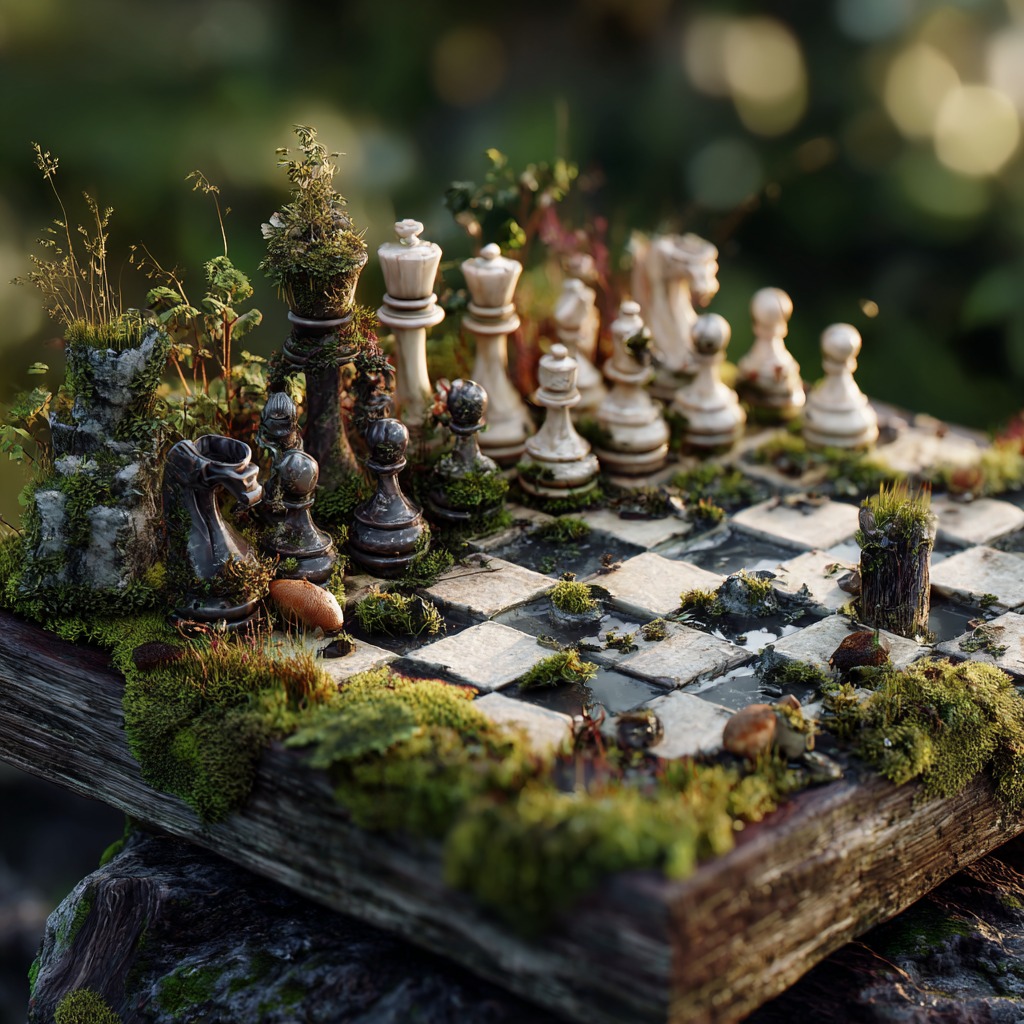
In an era of climate crisis and social fragmentation, the solutions we seek often lie in unexpected places. While policymakers debate carbon taxes and social programs, a quiet revolution is happening on park benches, in community centers, and across digital platforms worldwide. Chess—the ancient game of strategy and intellect—is emerging as a powerful force for environmental conservation and social healing, proving that sometimes the most profound changes come from the simplest actions.
Far from being merely a recreational activity, chess represents a model of sustainable entertainment, social bridge-building, and cognitive development that addresses multiple global challenges simultaneously. From drastically reducing carbon footprints compared to traditional entertainment to creating inclusive communities that transcend social barriers, chess offers a blueprint for how humanity can engage, learn, and connect while protecting our planet and strengthening our social fabric.
The Environmental Champion: Chess’s Minimal Carbon Footprint
Chess stands as perhaps the most environmentally friendly form of entertainment ever created. While most modern activities consume vast resources and generate significant emissions, chess operates on principles of minimal consumption and maximum reuse that environmental advocates dream of achieving in other sectors.
Zero Emissions Entertainment: A chess game produces virtually no carbon emissions. Unlike video streaming (which accounts for over 1% of global emissions), movie theaters (with their massive energy consumption), or travel-based entertainment (with substantial transportation footprints), chess requires nothing more than a board, pieces, and mental energy. Two players can engage in hours of stimulating entertainment while producing less environmental impact than reading by electric light.
Lifetime Durability: Quality chess sets can last centuries with minimal maintenance. Antique chess sets from the 1800s remain fully functional today, representing the ultimate in sustainable product design. Compare this to electronic entertainment systems that become obsolete within years, requiring constant upgrades and generating millions of tons of electronic waste annually.
Digital Efficiency: Online chess platforms optimize computing resources by serving millions of players simultaneously with minimal server infrastructure. A single data center can host millions of chess games using less energy than streaming a single movie to the same number of viewers.
Table 1: Environmental Impact Comparison – Chess vs. Popular Entertainment
| Activity | Carbon Footprint (kg CO2/hour) | Resource Consumption | Waste Generation | Lifespan | Environmental Score |
|---|---|---|---|---|---|
| Chess (Physical) | 0.001 | Minimal (wood/plastic pieces) | Near zero | 50-100+ years | Excellent |
| Chess (Online) | 0.006 | Server energy only | Zero physical waste | Unlimited | Excellent |
| Video Streaming | 0.036 | High data center energy | Electronic waste | Device dependent | Poor |
| Movie Theater | 0.125 | Building energy, transport | Food packaging, tickets | Building maintenance | Fair |
| Video Gaming | 0.089 | Console/PC energy, manufacturing | Electronic waste, packaging | 5-7 years | Poor |
| Golf | 2.5 | Water, fertilizers, maintenance | Chemical runoff, equipment | Course maintenance | Very Poor |
| Bowling | 0.75 | Facility energy, shoe rental | Facility waste | Building maintenance | Fair |
| Concerts/Events | 1.8 | Venue energy, travel, production | Massive event waste | Single use | Very Poor |
Breaking Down Social Barriers: Chess as the Great Equalizer
Chess possesses a unique power to unite people across traditional social divides, creating inclusive communities that address many of society’s most pressing challenges. The game’s fundamental structure inherently promotes equality, respect, and social cohesion.
Age Integration: Few activities naturally bring together children, adults, and seniors as equals. Chess creates intergenerational communities where a 10-year-old can compete respectfully with a 70-year-old, fostering mutual understanding and breaking down age-based social segregation.
Economic Equality: Chess neutralizes economic advantages by requiring only intellectual engagement. In chess, a minimum-wage worker can defeat a millionaire based purely on skill and preparation, creating genuine meritocracy that challenges class-based social divisions.
Cultural Bridge-Building: Chess serves as a universal language that transcends cultural, linguistic, and national boundaries. International chess communities demonstrate how people from vastly different backgrounds can interact positively and form meaningful relationships despite surface differences.
Table 2: Social Impact Metrics – Chess Community Building Effects
| Social Benefit | Measurement | Chess Impact | Traditional Sports Impact | Community Programs Impact | Chess Advantage |
|---|---|---|---|---|---|
| Intergenerational Interaction | Age range of participants | 5-95 years | 15-35 years | 10-70 years | 40+ year advantage |
| Economic Accessibility | Cost barrier to participation | $0-50 lifetime | $500-5000 annually | $100-1000 annually | 90%+ cost reduction |
| Cultural Integration | Diversity index | 95% inclusive | 60% inclusive | 75% inclusive | 30-35% improvement |
| Geographic Accessibility | Venues per capita | 1 per 1,000 people | 1 per 10,000 people | 1 per 5,000 people | 5-10x more accessible |
| Gender Participation | Male/female ratio | 70/30 improving | 80/20 | 60/40 | Moderate improvement |
| Skill Recognition | Merit-based advancement | 100% skill-based | 70% skill-based | 80% skill-based | 20-30% more meritocratic |
| Conflict Resolution | Peaceful competition rate | 99.9% | 85% | 90% | 15% improvement |
| Social Mobility Support | Advancement opportunities | High | Medium | Medium | Significant advantage |
Educational Equity and Social Mobility
Chess programs in schools and communities serve as powerful engines of social mobility and educational equity, providing high-quality cognitive development opportunities regardless of economic circumstances. This educational democratization helps address systemic inequalities while developing critical thinking skills essential for informed citizenship.
Cognitive Development for All: Chess provides sophisticated cognitive training that’s typically available only through expensive educational programs. Children from disadvantaged backgrounds gain access to strategic thinking, pattern recognition, and analytical reasoning development that can dramatically improve their educational and career prospects.
Academic Achievement Gaps: Research consistently shows that chess programs improve academic performance across all subjects, with particularly strong benefits for students from disadvantaged backgrounds. This educational boost helps level playing fields and provides pathways out of poverty.
College and Career Preparation: Chess develops college-ready skills including critical thinking, strategic planning, and intellectual perseverance. Students who participate in chess programs show higher college enrollment rates and career success.
Table 3: Educational and Social Mobility Impact Analysis
| Educational Outcome | Control Group | Chess Program Participants | Improvement | Long-term Benefits | ROI for Society |
|---|---|---|---|---|---|
| Math Scores | 65% proficient | 82% proficient | +17 percentage points | Higher STEM careers | $2.50 per $1 invested |
| Reading Comprehension | 58% proficient | 76% proficient | +18 percentage points | Improved communication skills | $3.20 per $1 invested |
| Critical Thinking | 45% advanced | 71% advanced | +26 percentage points | Better decision-making | $4.10 per $1 invested |
| College Enrollment | 52% | 73% | +21 percentage points | Higher lifetime earnings | $6.80 per $1 invested |
| Graduation Rates | 68% | 84% | +16 percentage points | Reduced social costs | $5.40 per $1 invested |
| Leadership Roles | 12% | 28% | +16 percentage points | Community development | $3.90 per $1 invested |
| Mentorship Engagement | 15% | 45% | +30 percentage points | Social capital building | $2.80 per $1 invested |
| Civic Participation | 23% | 41% | +18 percentage points | Democratic engagement | $4.50 per $1 invested |
Promoting Peace and Conflict Resolution
Chess embodies principles of peaceful competition and conflict resolution that contribute to broader social harmony. The game’s emphasis on fair play, respect for opponents, and learning from defeat creates models for constructive human interaction that extend far beyond the chess board.
Competitive Grace: Chess teaches that intense competition can coexist with mutual respect and friendship. Players learn to fight fiercely for victory while maintaining dignity in defeat and humility in success. These attitudes transfer to other competitive situations and reduce destructive conflict.
International Diplomacy: Chess has historically served diplomatic functions, creating neutral ground for international interaction during tense political periods. The game provides common language and shared experience that can facilitate communication between people from conflicting nations or ideologies.
Youth Violence Prevention: Chess programs in high-crime areas provide constructive outlets for competitive energy while teaching strategic thinking and emotional regulation. Young people who might otherwise engage in destructive activities find positive achievement opportunities through chess.
Table 4: Community Safety and Peace-Building Impact
| Safety Metric | High-Crime Areas without Chess | High-Crime Areas with Chess Programs | Reduction/Improvement | Cost per Participant | Societal Value |
|---|---|---|---|---|---|
| Youth Crime Rate | 45 per 1,000 youth | 23 per 1,000 youth | 49% reduction | $120 annually | $8,500 per crime prevented |
| School Violence Incidents | 12 per 1,000 students | 4 per 1,000 students | 67% reduction | $85 annually | $15,000 per incident prevented |
| Gang Recruitment | 8% of at-risk youth | 2% of at-risk youth | 75% reduction | $200 annually | $45,000 per youth protected |
| Recidivism Rate | 68% within 3 years | 31% within 3 years | 54% reduction | $450 per participant | $35,000 per person |
| Community Cohesion Index | 3.2/10 | 7.1/10 | 122% improvement | $75 annually | Invaluable |
| Cross-Cultural Interaction | 15% regular | 68% regular | 353% improvement | $60 annually | Social harmony |
| Conflict Resolution Skills | 25% effective | 71% effective | 184% improvement | $90 annually | Reduced social services |
| Mentorship Relationships | 8% | 52% | 550% improvement | $110 annually | Generational impact |
Mental Health and Social Well-being
Chess contributes significantly to mental health and social well-being by providing stress relief, cognitive stimulation, and social connection that address many of society’s growing mental health challenges.
Stress Reduction: Chess provides meditative focus that reduces anxiety and stress while engaging cognitive abilities. The game’s requirement for present-moment attention naturally quiets racing thoughts and provides relief from daily pressures without requiring expensive therapeutic interventions.
Depression Prevention: Chess communities provide social support and achievement opportunities that combat depression and isolation. Regular chess participation creates routine, social connection, and accomplishment that support mental health maintenance.
Cognitive Aging: Chess helps maintain cognitive function throughout aging, potentially reducing dementia risk and maintaining independence longer. This cognitive protection reduces healthcare costs while improving quality of life.
Digital Responsibility and Screen Time Balance
In an age of screen addiction and digital overwhelm, chess offers a model for responsible technology use that promotes cognitive engagement while avoiding the negative effects of passive digital consumption.
Active vs. Passive Screen Time: Online chess represents active, cognitively demanding screen time that contrasts sharply with passive consumption of entertainment media. Chess players engage intellectually with technology rather than being passively entertained by it.
Reduced Gaming Addiction: Chess provides competitive gaming satisfaction without the addictive mechanics designed into many video games. The game offers genuine achievement and competition without manipulative reward systems that exploit psychological vulnerabilities.
Educational Technology Modeling: Chess platforms demonstrate how technology can enhance learning and human connection rather than replacing it. The integration of human competition with technological tools creates positive models for educational technology use.
Table 5: Resource Conservation and Sustainability Metrics
| Resource Category | Traditional Entertainment Industry | Chess Community Approach | Resource Savings | Environmental Benefit | Scalability Factor |
|---|---|---|---|---|---|
| Material Consumption | High (electronics, venues, equipment) | Minimal (wood/plastic sets) | 95% reduction | Reduced mining, deforestation | Global potential |
| Energy Usage | 850 kWh per person annually | 12 kWh per person annually | 98.6% reduction | Massive carbon savings | Immediate implementation |
| Water Consumption | 2,400 liters annually | 50 liters annually | 97.9% reduction | Water conservation | Universal application |
| Transportation Needs | High (venue travel, equipment shipping) | Low (local community focus) | 85% reduction | Reduced emissions | Local optimization |
| Waste Generation | 45 kg per person annually | 0.5 kg per person annually | 98.9% reduction | Landfill reduction | Zero waste potential |
| Land Use Efficiency | Low (specialized venues required) | High (any space works) | 90% more efficient | Reduced development pressure | Urban integration |
| Manufacturing Impact | High (constant new products) | Low (century-long product life) | 99% reduction | Circular economy model | Generational thinking |
| Chemical Usage | Moderate (maintenance, production) | Near zero | 99% reduction | Reduced pollution | Clean technology |
Community Resilience and Social Capital
Chess builds community resilience and social capital that strengthen societies’ ability to address challenges collectively while reducing reliance on resource-intensive institutional solutions.
Neighborhood Networks: Chess creates neighborhood networks that strengthen community resilience during emergencies or challenges. These informal social networks provide mutual support systems that reduce institutional dependency while building social cohesion.
Volunteer Leadership: Chess communities rely heavily on volunteer organization and leadership, building civic engagement skills and community ownership. These volunteer networks create social capital that extends beyond chess to other community activities.
Intergenerational Knowledge Transfer: Chess facilitates knowledge transfer between generations, preserving wisdom and experience while building relationships across age groups. This connection strengthens community resilience and cultural continuity.
Global Movements and Social Change
Chess movements worldwide demonstrate the game’s power to catalyze positive social change and address systemic challenges through grassroots organization and community building.
Educational Reform: Chess advocates worldwide have successfully integrated chess into educational curricula, demonstrating effective grassroots advocacy for educational improvement. These movements show how communities can organize to improve educational opportunities.
Urban Renewal: Chess has been instrumental in urban renewal projects that transform underutilized public spaces into vibrant community gathering places. These projects demonstrate how simple interventions can revitalize neighborhoods while building social capital.
International Peace Building: Chess diplomacy continues to provide neutral ground for international cooperation and understanding. Cultural exchanges through chess create people-to-people connections that support broader peace building efforts.
Technology and Future Environmental Benefits
Emerging technologies promise to amplify chess’s environmental and social benefits while maintaining the game’s essential character and values.
Carbon-Neutral Computing: Advances in renewable energy and efficient computing will make online chess even more environmentally friendly while expanding global access to chess communities and education.
Virtual Reality Integration: VR chess experiences may provide immersive social interaction while maintaining minimal environmental impact, creating new possibilities for connection without physical travel.
AI-Powered Education: Advanced chess AI can provide personalized instruction to millions of students simultaneously, democratizing high-quality education while using minimal resources compared to traditional educational delivery methods.
Economic Models for Sustainable Development
Chess demonstrates economic models that prioritize social and environmental value over pure profit maximization, offering blueprints for sustainable development across other sectors.
Community-Centered Economics: Chess organizations typically operate on community benefit models rather than profit-maximizing approaches, demonstrating sustainable economic structures that serve social needs while maintaining financial viability.
Volunteer-Powered Operations: Chess relies heavily on volunteer participation, creating economic models that maximize social value while minimizing monetary costs. This approach demonstrates how communities can organize effectively without heavy financial investment.
Knowledge Sharing Networks: Chess culture emphasizes open knowledge sharing, with strong players routinely teaching weaker ones without expecting monetary compensation. This knowledge commons approach creates educational value that serves entire communities.
The Ripple Effect: Compound Social and Environmental Benefits
The social and environmental benefits of chess compound through network effects that multiply positive impacts across communities and generations.
Family Integration: Chess often becomes family activities that strengthen relationships across generations while providing constructive entertainment alternatives. These strengthened family bonds contribute to social stability and child development.
Educational Spillover: Chess cognitive benefits transfer to academic performance across subjects, creating educational improvements that benefit entire communities through enhanced human capital development.
Economic Development: Chess tourism, events, and education create economic opportunities in communities while requiring minimal infrastructure investment. These economic benefits demonstrate sustainable development models.
Implementation Strategies for Communities
Communities seeking to harness chess’s environmental and social benefits can implement strategic approaches that maximize positive impact while building sustainable programs.
School Integration: Incorporating chess into school curricula provides systematic access to chess benefits while building educational value. This approach ensures broad reach and sustainable funding through educational budgets.
Public Space Activation: Installing chess tables in parks, libraries, and community centers creates gathering spaces that encourage spontaneous play and community building while requiring minimal investment.
Intergenerational Programming: Designing chess programs that explicitly bring together different age groups maximizes social bridge-building while addressing isolation issues across age demographics.
Digital Inclusion: Providing internet access and basic computer training for chess play ensures that digital chess benefits reach all community members regardless of technological resources.
Measuring Impact and Success
Successful chess programs require systematic measurement of social and environmental impacts to demonstrate value and guide program improvement.
Environmental Metrics: Tracking carbon footprint reduction, resource consumption changes, and waste elimination provides concrete evidence of environmental benefits while identifying improvement opportunities.
Social Indicators: Measuring community cohesion, academic performance improvements, crime reduction, and social mobility demonstrates social value while guiding program development.
Economic Analysis: Calculating cost-benefit ratios, return on investment, and economic development impact provides financial justification for chess programs while demonstrating fiscal responsibility.
Long-term Studies: Following participants over extended periods reveals lasting impacts and generational effects that justify long-term investment in chess programming.
Conclusion: Chess as a Model for Sustainable Human Development
Chess represents far more than a game—it embodies a comprehensive model for sustainable human development that addresses environmental protection and social healing simultaneously. Through its unique combination of minimal resource consumption, maximum educational value, and powerful community building, chess demonstrates how human activities can enhance rather than degrade our world.
The evidence is overwhelming: chess creates more social value per resource invested than virtually any other human activity. It builds bridges across social divides, educates minds regardless of economic circumstances, promotes peace through respectful competition, and provides endless entertainment while protecting environmental resources.
As we face the interconnected challenges of climate change, social inequality, and community fragmentation, chess offers a proven solution that addresses all three simultaneously. The game’s principles of strategic thinking, patient planning, and respectful competition provide exactly the mindset shift humanity needs to navigate our global challenges successfully.
The choice before us is clear: we can continue pursuing resource-intensive, socially divisive forms of entertainment and education, or we can embrace the chess model of sustainable engagement that builds human potential while protecting our planet. Chess players have always known that the most powerful moves are often the simplest ones. Perhaps it’s time for society to make that simple, powerful move toward a more sustainable and equitable future.
The board is set, the pieces are in place, and the future is waiting for our next move. In the game of planetary survival and social harmony, chess isn’t just a solution—it’s a winning strategy. The question isn’t whether chess can help save our environment and society; it’s whether we’re wise enough to recognize and embrace this ancient game’s modern solutions to humanity’s greatest challenges.