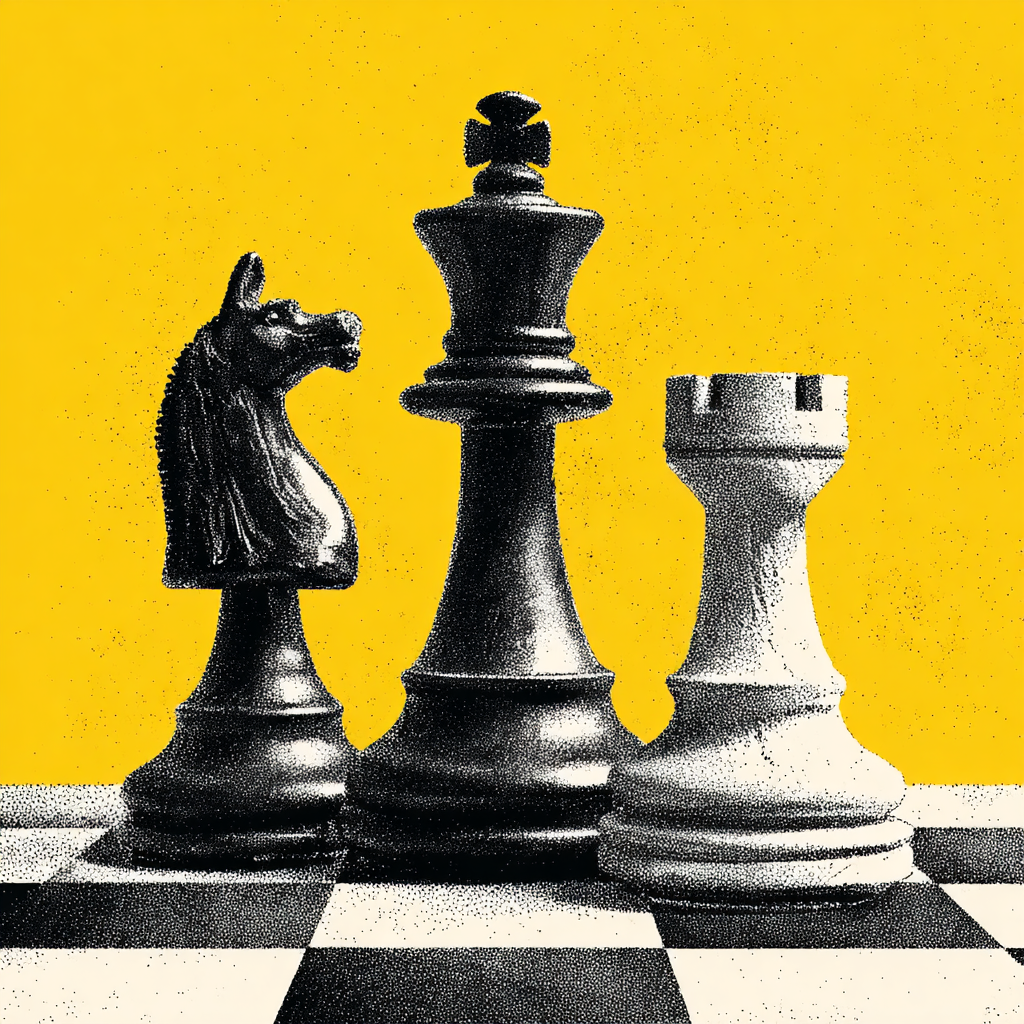
Chess drills, particularly tactical puzzles, are notorious for being challenging even for experienced players. If you’ve ever found yourself staring at a puzzle for minutes without finding the solution, or wondered why your puzzle rating is so different from your playing strength, you’re not alone. Understanding why chess drills are difficult can help you approach them more effectively and improve your overall chess game.
The Nature of Chess Complexity
Chess drills are hard because they compress the infinite complexity of chess into focused, high-pressure situations that demand precise calculation and pattern recognition. Unlike a normal game where you gradually build up to tactical opportunities, puzzles present you with critical moments that require immediate and accurate responses.
The fundamental challenge lies in the fact that chess drills test multiple cognitive skills simultaneously: visualization, calculation, pattern recognition, and decision-making under pressure. Each of these elements presents its own difficulties, and when combined, they create a formidable mental challenge.
Table 1: Core Cognitive Challenges in Chess Drills
| Challenge Type | Description | Why It’s Difficult | Example Impact |
|---|---|---|---|
| Visualization | Mentally seeing future board positions | Requires holding complex spatial information in memory | Missing tactics 2-3 moves deep |
| Pattern Recognition | Identifying familiar tactical motifs | Thousands of patterns must be memorized | Failing to spot basic pins or forks |
| Calculation | Computing precise move sequences | Exponential branching of possibilities | Miscalculating forcing variations |
| Time Pressure | Solving under time constraints | Stress affects cognitive performance | Making obvious blunders when rushed |
| Context Awareness | Understanding when tactics are available | No clear indication that tactics exist | Missing opportunities in actual games |
The Rating Paradox: Why Puzzle Ratings Don’t Match Playing Strength
One of the most confusing aspects of chess drills is the disconnect between puzzle ratings and actual playing strength. Many players find their puzzle rating is 400-800 points higher than their game rating, leading to frustration and confusion about their actual skill level.
This phenomenon occurs because puzzles provide a crucial piece of information that real games don’t: the knowledge that a tactical solution exists. In a puzzle, you know there’s a winning combination waiting to be found. In a real game, you must first recognize when tactical opportunities arise, which is often the hardest part.
Table 2: Puzzle Rating vs Game Rating Comparison
| Game Rating | Typical Puzzle Rating | Point Difference | Explanation |
|---|---|---|---|
| 800-1000 | 1200-1600 | +400-600 | Basic pattern recognition without game context |
| 1200-1400 | 1600-2000 | +400-600 | Can solve when knowing solution exists |
| 1500-1700 | 2000-2400 | +500-700 | Strong tactical vision, weaker positional play |
| 1800-2000 | 2300-2700 | +500-700 | Good calculation but struggles with application |
| 2000+ | 2500-3000+ | +500+ | Even masters have significant gaps |
The Levels of Tactical Difficulty
Chess puzzles are typically rated on a scale similar to chess ratings, but the difficulty progression is not linear. Understanding what makes puzzles harder at different rating levels can help you target your training more effectively.
Table 3: Puzzle Difficulty Breakdown by Rating
| Rating Range | Difficulty Level | Typical Features | Skills Required | Common Themes |
|---|---|---|---|---|
| 800-1200 | Beginner | 1-2 move solutions | Basic pattern recognition | Mate in 1, simple captures |
| 1200-1600 | Intermediate | 2-3 move combinations | Tactical awareness | Forks, pins, skewers |
| 1600-2000 | Advanced | 3-4 move sequences | Calculation skills | Complex combinations |
| 2000-2400 | Expert | 4-5+ move lines | Deep visualization | Sacrificial attacks |
| 2400+ | Master | Multi-move studies | Perfect calculation | Artistic combinations |
Common Obstacles That Make Drills Challenging
Several specific factors contribute to the difficulty of chess drills. Understanding these obstacles can help you develop strategies to overcome them.
Pattern Overload: Chess contains hundreds of tactical patterns, from simple forks to complex deflection motifs. The sheer volume of patterns to memorize can be overwhelming, especially when similar positions require different solutions.
Calculation Depth: As puzzles become more difficult, they require calculating longer sequences of moves. Human working memory is limited, making it challenging to visualize positions 4-6 moves ahead while considering multiple variations.
Visualization Breakdown: Many players struggle with mental board visualization, particularly for complex positions. This limitation becomes more apparent in difficult puzzles that require seeing several moves ahead.
Pattern Interference: Sometimes knowing multiple patterns can hurt performance. Players might see one tactical motif and miss a better one, or try to force a pattern that doesn’t quite work in the given position.
Table 4: Why Different Types of Tactical Drills Are Challenging
| Drill Type | Primary Challenge | Success Rate | Why It’s Hard | Training Recommendation |
|---|---|---|---|---|
| Mate in 1 | Pattern recognition | 90%+ | False confidence builder | Limited value for improvement |
| Mate in 2-3 | Calculation accuracy | 60-70% | Multiple candidate moves | Focus on checking all possibilities |
| Complex combinations | Deep visualization | 30-50% | Long move sequences | Practice blindfold exercises |
| Defensive tactics | Spotting hidden resources | 40-60% | Looking for opponent’s threats | Study backward from final position |
| Endgame studies | Precise technique | 20-40% | Small margins for error | Memorize key positions |
The Transfer Problem: From Puzzles to Games
One of the biggest frustrations for chess players is the difficulty of applying tactical skills learned through drills to actual games. This “transfer problem” occurs for several reasons:
Context Recognition: In puzzles, you know a tactic exists. In games, you must first recognize when tactical opportunities arise, which requires different skills.
Time Management: Games provide varying amounts of time to find tactics, unlike puzzles where you can take as long as needed (in untimed versions).
Psychological Pressure: The stakes in a real game create pressure that can interfere with pattern recognition and calculation.
Position Complexity: Real game positions often have more “noise” – irrelevant pieces and considerations that can distract from the core tactical elements.
The Difficulty Curve and Rating Inflation
Understanding how puzzle difficulty is determined can help explain why they often feel inconsistent. Puzzle ratings are typically calculated based on how many players solve them correctly and how quickly, but this system has several flaws:
Rating Inflation: Since players know a solution exists, puzzle ratings tend to be inflated compared to game ratings. A 2000-rated puzzle might only reflect 1400-1600 level game strength.
Sample Bias: Players who attempt harder puzzles are often already strong, which can skew the rating calculations.
Time Factors: Some platforms reward speed, while others focus only on accuracy, leading to different types of difficulty assessments.
Table 5: Factors That Make Specific Chess Drills More Difficult
| Factor | Impact Level | Description | Example | Improvement Strategy |
|---|---|---|---|---|
| Move Depth | High | Tactics requiring 4+ moves | Deep sacrificial attacks | Practice calculation exercises |
| Candidate Moves | Medium | Multiple plausible options | 3-4 reasonable-looking moves | Systematic move consideration |
| Quiet Moves | High | Non-forcing continuations | Positional sacrifices | Study grandmaster games |
| Defensive Resources | Very High | Finding saving moves | Counterplay in lost positions | Practice defensive puzzles |
| Pattern Disguise | High | Hidden tactical motifs | Unusual piece arrangements | Expose to varied examples |
| Material Imbalance | Medium | Unequal exchanges | Queen vs multiple pieces | Study compensation principles |
| King Safety | High | Complex attacking scenarios | Multi-piece attacks | Master mating patterns |
| Endgame Precision | Very High | Exact technique required | Rook endgame nuances | Memorize key positions |
Overcoming the Challenges
While chess drills are inherently difficult, there are proven strategies to make them more manageable and effective:
Start with Pattern Recognition: Before attempting complex combinations, ensure you can quickly identify basic tactical motifs like pins, forks, and skewers. Mastery of simple patterns provides the foundation for recognizing complex combinations.
Practice Systematic Thinking: Develop a consistent approach to puzzle-solving. Look for checks, captures, and threats first. Consider all forcing moves before exploring quiet continuations.
Build Visualization Skills: Practice blindfold chess or board memory exercises to strengthen your ability to see positions mentally. Start with simple positions and gradually increase complexity.
Focus on Understanding, Not Speed: While speed is valuable, understanding why solutions work is more important for long-term improvement. Analyze positions even after finding the correct answer.
Bridge the Gap to Games: Practice finding tactics in real game positions, not just composed puzzles. This helps develop the recognition skills needed for practical play.
The Myth of Pure Tactical Training
Recent discussions among chess educators have challenged the traditional emphasis on tactical puzzles. Some grandmasters argue that focusing too heavily on tactics can actually hinder overall chess development:
Positional Neglect: Players who focus primarily on tactics may neglect positional understanding, leading to poor position building that limits tactical opportunities.
Pattern Obsession: Over-reliance on memorized patterns can prevent players from understanding the deeper principles that create tactical opportunities.
Context Ignorance: Puzzle solving doesn’t teach when to look for tactics, which is often more important than calculating them once found.
The Role of Difficulty in Learning
The challenge presented by chess drills serves an important purpose in skill development. Difficult puzzles push players to their limits, forcing them to develop new cognitive abilities:
Cognitive Flexibility: Hard puzzles require considering unconventional moves and abandoning preconceptions about how pieces should be used.
Mental Endurance: Sustained effort on difficult positions builds the mental stamina needed for long games.
Pattern Expansion: Exposure to complex tactical ideas expands your tactical vocabulary, even if you can’t solve every puzzle immediately.
Resilience Building: Struggling with difficult puzzles teaches persistence and helps develop a growth mindset toward chess improvement.
Technology and Modern Training
Modern chess training has been revolutionized by technology, but this has also introduced new challenges:
Algorithm-Based Difficulty: Computer-generated puzzles sometimes lack the artistic beauty of composed problems but offer vast databases for training.
Adaptive Learning: Platforms that adjust difficulty based on performance can help maintain appropriate challenge levels, but may also create artificial progression curves.
Instant Feedback: Immediate feedback on solutions can accelerate learning but may also encourage superficial pattern matching over deep understanding.
Conclusion: Embracing the Difficulty
Chess drills are hard because chess itself is an incredibly complex game that demands mastery of multiple cognitive skills simultaneously. The difficulty is not a bug in your training program—it’s a feature that drives improvement.
Understanding why drills are challenging can help you approach them with realistic expectations and effective strategies. Remember that the goal isn’t to solve every puzzle quickly, but to gradually expand your tactical understanding and calculation abilities.
The key to success with chess drills lies in consistent practice, gradual progression, and maintaining focus on understanding over speed. By embracing the difficulty and viewing each challenging puzzle as an opportunity for growth, you’ll find that what once seemed impossible becomes achievable.
Most importantly, remember that tactical ability is just one component of chess strength. While drills are valuable for developing pattern recognition and calculation skills, they must be balanced with positional understanding, opening knowledge, and endgame technique to achieve well-rounded chess improvement.
The difficulty of chess drills reflects the beautiful complexity of the game itself. Each puzzle solved is a small victory in your ongoing journey toward chess mastery.