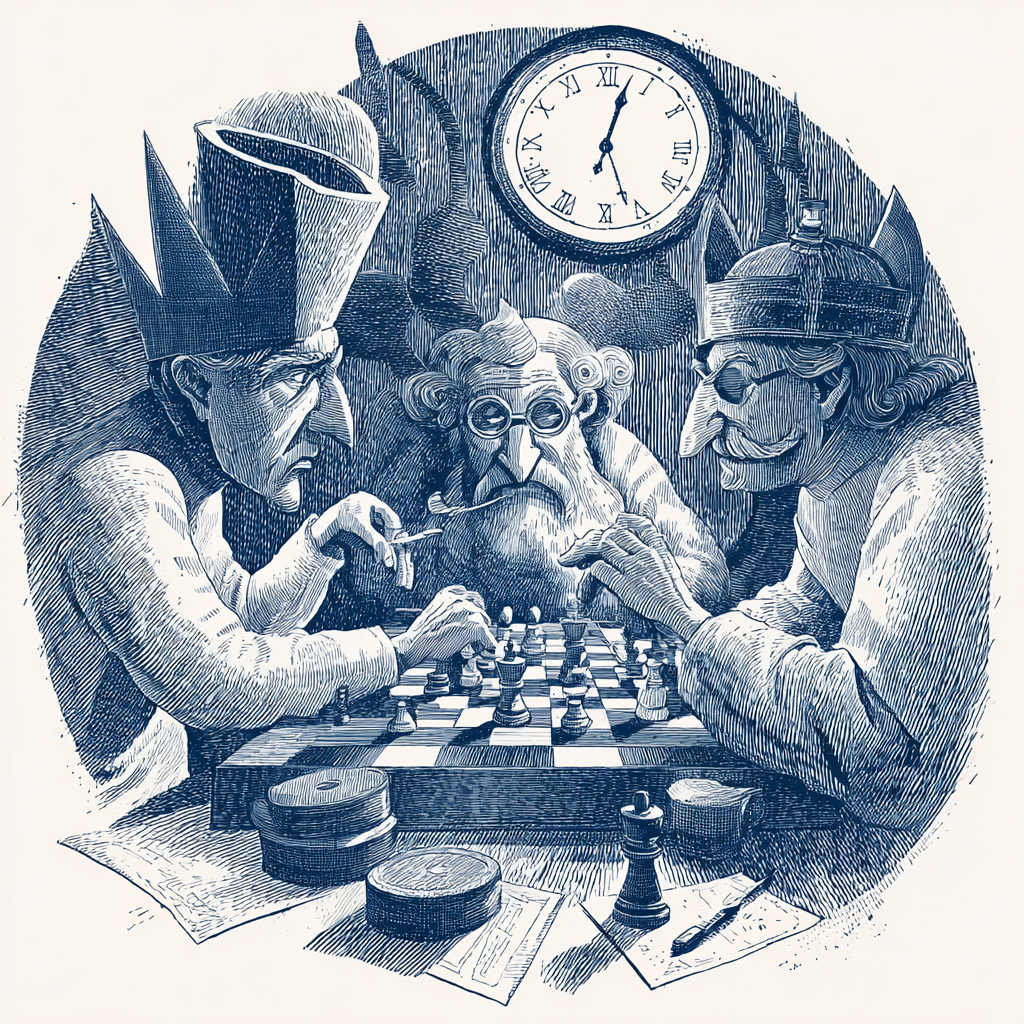
The relationship between aging and chess performance presents a fascinating paradox in cognitive science. While chess is often celebrated as a purely intellectual pursuit that should theoretically improve with accumulated knowledge and experience, many players notice their performance declining as they age. This phenomenon challenges our assumptions about wisdom, experience, and mental acuity, revealing complex interactions between cognitive aging, motivation, and the unique demands of competitive chess.
However, the narrative of inevitable chess decline with age is more nuanced than commonly believed. While certain cognitive changes affect chess performance, many factors contributing to apparent age-related decline stem from lifestyle changes, reduced practice intensity, and shifting priorities rather than fundamental cognitive deterioration. Understanding these factors helps separate myth from reality while providing insights for maintaining chess strength throughout life.
Cognitive Changes and Their Chess Impact
The human brain undergoes subtle but measurable changes throughout the aging process that directly affect the cognitive functions chess demands. However, these changes don’t uniformly impair all mental abilities, and their impact on chess performance varies significantly among individuals.
Processing Speed and Calculation Depth One of the most consistent age-related cognitive changes involves decreased processing speed—the rate at which the brain can analyze information and execute mental operations. In chess, this manifests as slower tactical calculation, reduced ability to analyze deep variations quickly, and longer decision-making times under pressure.
Young chess players often excel at rapid calculation of complex tactical sequences, visualizing multiple moves ahead with remarkable speed. As processing speed naturally declines with age, players may find themselves unable to calculate as deeply in the same time frame, potentially missing tactical opportunities they would have spotted easily in their youth.
This change particularly affects performance in faster time controls. Blitz and rapid chess rely heavily on quick pattern recognition and tactical calculation, areas where processing speed proves crucial. Players who dominated in speed chess during their twenties may struggle to maintain the same level in these formats as they age.
Working Memory and Position Complexity Working memory—the ability to hold and manipulate information in conscious awareness—shows gradual decline with age. Chess places enormous demands on working memory as players must simultaneously track piece positions, calculate variations, evaluate multiple candidate moves, and remember strategic plans.
Complex middlegame positions that require managing multiple strategic threads simultaneously become more challenging as working memory capacity decreases. Older players may find themselves losing track of tactical motifs or strategic ideas they’re trying to coordinate, leading to oversights and suboptimal move selection.
However, experienced players often compensate for working memory limitations through improved pattern recognition and strategic understanding that reduces the cognitive load required for position evaluation.
Attention and Concentration Stamina Sustained attention and concentration endurance may decline with age, affecting performance in long classical games. Tournament chess requires maintaining peak mental performance for 4-6 hours, with multiple games over several days creating cumulative fatigue effects.
Older players often report greater difficulty maintaining sharp focus throughout entire games, particularly in the later stages when fatigue accumulates. This concentration decline can lead to time trouble, calculation errors, and endgame technique failures that wouldn’t occur with fresh mental energy.
Experience vs. Declining Faculties: The Compensation Effect
While aging brings certain cognitive challenges, it also provides advantages that can partially or completely offset declining mental faculties. The interaction between accumulated chess knowledge and changing cognitive abilities creates complex performance patterns that vary greatly among individual players.
Pattern Recognition and Intuitive Understanding Decades of chess experience create vast libraries of stored patterns, strategic concepts, and positional understanding that don’t diminish with age. Experienced players can evaluate positions more efficiently by recognizing familiar patterns rather than calculating everything from first principles.
This pattern-based evaluation often proves more reliable than pure calculation, especially in strategic positions where long-term planning matters more than tactical precision. Older masters frequently demonstrate superior positional understanding that compensates for reduced calculation speed.
Strategic Depth and Planning Ability Long-term strategic planning and deep positional understanding often improve with age and experience. Older players typically show better judgment about which positions to seek, how to handle specific pawn structures, and when to make strategic commitments.
This wisdom-based approach to chess can prove very effective, particularly in classical time controls where there’s sufficient time to implement long-term plans. Many aging players adapt their style toward more strategic, less tactically demanding positions that suit their evolving strengths.
Psychological Maturity and Emotional Control Competitive chess places significant psychological demands on players, requiring emotional regulation under pressure, resilience after setbacks, and consistent motivation throughout long events. Older players often possess superior emotional maturity that enhances competitive performance.
Reduced ego involvement and better perspective on chess results can actually improve performance by reducing anxiety and allowing clearer thinking during critical moments. While younger players might tilt after bad results, experienced players often maintain emotional equilibrium that supports consistent play.
| Cognitive Factor | Age-Related Change | Chess Impact | Peak Age Range | Compensation Strategies | Adaptation Timeline |
|---|---|---|---|---|---|
| Processing Speed | Gradual decline | Slower calculation | 20-30 years | Pattern recognition focus | 6-12 months |
| Working Memory | Moderate decline | Complex position difficulty | 25-35 years | Simplified position seeking | 1-2 years |
| Attention Span | Variable decline | Late-game concentration | 20-40 years | Better pacing strategies | 3-6 months |
| Pattern Recognition | Improvement | Faster evaluation | 40-60 years | Leverage experience | Ongoing |
| Strategic Understanding | Improvement | Better planning | 35-65 years | Style adaptation | 1-3 years |
| Emotional Control | Improvement | Pressure performance | 30+ years | Mental training | 6-12 months |
Lifestyle and Motivational Factors
Many apparent age-related chess declines actually result from lifestyle changes and shifting priorities rather than cognitive deterioration. Understanding these non-cognitive factors reveals that much “aging” decline is preventable through conscious choices about chess engagement.
Reduced Practice Intensity and Frequency Younger players often have fewer life responsibilities, allowing intensive chess study and frequent tournament play. As players age, career demands, family obligations, and other interests typically reduce time available for serious chess study and practice.
The “use it or lose it” principle applies strongly to chess skills. Tactical sharpness, opening knowledge, and calculation accuracy all require regular practice to maintain. Players who reduce their chess activity often experience performance decline that stems from rustiness rather than aging.
Professional chess players who maintain intensive training schedules often show minimal age-related decline well into their fifties or sixties, demonstrating that sustained practice can largely prevent skill deterioration.
Motivation and Competitive Drive Changes Peak chess performance requires intense competitive motivation and willingness to invest significant time and energy in improvement. As players age, their motivation for chess achievement may decrease as other life priorities take precedence.
Reduced competitive drive can lead to less thorough preparation, decreased study intensity, and more casual approach to tournaments. These motivational changes often have greater impact on performance than any cognitive aging effects.
Some players find renewed chess motivation later in life as retirement provides more available time and reduced external pressures allow return to intensive chess pursuit.
Physical Health and Energy Levels Chess performance depends more on physical condition than commonly recognized. Tournament chess requires sustained mental energy over long periods, demanding physical stamina and overall health to maintain peak cognitive performance.
Age-related health issues, medication effects, sleep pattern changes, and reduced physical fitness can all impact chess performance indirectly through their effects on mental energy and concentration ability.
Players who maintain good physical health through regular exercise, proper nutrition, and adequate sleep often show much slower chess performance decline than those who neglect physical conditioning.
Technology and Modern Chess Challenges
The evolution of chess through computer analysis and online play has created new challenges that may disproportionately affect older players, contributing to perceived age-related decline.
Opening Theory Explosion Modern opening theory extends much deeper than in previous eras, with computer analysis revealing precise move sequences 20-30 moves deep in major variations. Keeping current with this theoretical development requires constant study and memory maintenance.
Older players who learned chess before the computer era may struggle to adapt to the memory-intensive approach that modern opening preparation demands. The shift from understanding-based to memorization-based opening play can disadvantage players whose learning occurred in different eras.
Digital Platform Adaptation Online chess has become increasingly important for training and competition, but older players may face steeper learning curves for digital platforms and interfaces. Technical difficulties with online play can create performance disadvantages unrelated to chess ability.
The informal, rapid-fire nature of much online chess may not suit players accustomed to traditional tournament environments, creating apparent performance decline that reflects format adaptation rather than skill loss.
Individual Variation and Exceptional Cases
Age affects different players in dramatically different ways, with some maintaining or even improving their chess strength well into advanced age while others experience earlier decline.
Exceptional Longevity Examples Chess history includes numerous examples of players maintaining world-class strength into their sixties and beyond. Viktor Korchnoi competed at the highest level into his eighties, while Anatoly Karpov remained formidable well past traditional peak years.
These exceptional cases demonstrate that significant age-related chess decline isn’t inevitable, particularly for players who maintain intensive practice schedules and competitive motivation.
Genetic and Individual Factors Cognitive aging rates vary enormously among individuals based on genetics, lifestyle, health status, and personality factors. Some players may show minimal decline into their seventies while others notice changes in their forties.
Individual playing styles also affect how aging impacts performance. Players who rely heavily on calculation and tactical sharpness may notice earlier decline than those whose strength lies in strategic understanding and positional play.
| Player Archetype | Primary Strengths | Age Vulnerability | Adaptation Strategy | Performance Timeline | Mitigation Success |
|---|---|---|---|---|---|
| Tactical Specialist | Quick calculation, pattern recognition | High (speed-dependent) | Strategic style shift | Gradual decline 35+ | Moderate success |
| Positional Master | Strategic understanding, planning | Low (knowledge-based) | Leverage experience | Stable until 60+ | High success |
| Opening Theorist | Memory, preparation | Moderate (memory-dependent) | Simplified repertoires | Variable decline | Moderate success |
| Endgame Expert | Technique, precision | Low (skill-based) | Maintain practice | Stable performance | High success |
| Intuitive Player | Pattern recognition, feel | Moderate (speed-dependent) | Trust experience | Gradual adaptation | Moderate-High success |
| Universal Player | Balanced skills | Variable | Adaptive specialization | Individual variation | High potential |
Strategies for Maintaining Chess Strength with Age
Understanding the factors contributing to age-related chess changes enables development of strategies for minimizing decline and potentially maintaining or improving performance throughout life.
Adaptive Style Evolution Successful aging chess players often evolve their playing style to emphasize strengths that improve with experience while minimizing reliance on abilities that decline with age. This might involve seeking more strategic positions, avoiding sharp tactical melees, or focusing on endgame technique.
Style adaptation doesn’t mean accepting inferior play but rather optimizing approach to leverage accumulated wisdom and experience while working within changing cognitive constraints.
Targeted Training and Practice Maintaining chess strength requires ongoing practice, but older players can optimize training efficiency by focusing on areas most likely to preserve performance. Regular tactical training maintains pattern recognition, while endgame study preserves technical skills that prove crucial in long games.
Quality over quantity becomes increasingly important as available study time may decrease. Focused, intensive practice sessions often prove more effective than lengthy but unfocused study periods.
Physical and Mental Health Optimization Recognizing chess as a cognitively demanding activity that benefits from good physical condition encourages attention to overall health and fitness. Regular exercise, proper nutrition, adequate sleep, and stress management all support cognitive performance.
Mental exercises beyond chess, including reading, puzzles, and learning new skills, may help maintain general cognitive flexibility that supports chess performance.
Conclusion: Aging Gracefully in Chess
The relationship between aging and chess performance is complex and highly individual, influenced by cognitive changes, lifestyle factors, motivation, and adaptation strategies. While certain age-related cognitive changes do affect chess performance, many factors contributing to apparent decline are controllable through conscious choices about practice, health, and approach.
The key insight is that chess “aging” often reflects reduced engagement rather than inevitable decline. Players who maintain intensive practice, adapt their style to leverage accumulated wisdom, and preserve competitive motivation can often maintain high performance well beyond traditional peak years.
Rather than accepting decline as inevitable, aging chess players can view their evolving relationship with the game as an opportunity for growth and adaptation. The strategic depth and positional understanding that come with experience can provide rich satisfaction even as raw calculating power may diminish.
Chess offers unique advantages for cognitive aging, providing complex mental stimulation that may help maintain overall cognitive function while offering a competitive outlet that remains engaging throughout life. The challenge isn’t preventing all age-related changes but rather adapting successfully to maintain the joy and challenge that make chess a lifelong pursuit.
The most successful aging chess players don’t fight against time but learn to dance with it, evolving their game to remain competitive and fulfilling regardless of age. In this sense, chess aging becomes not a story of decline but one of continuous adaptation and wisdom-based growth.